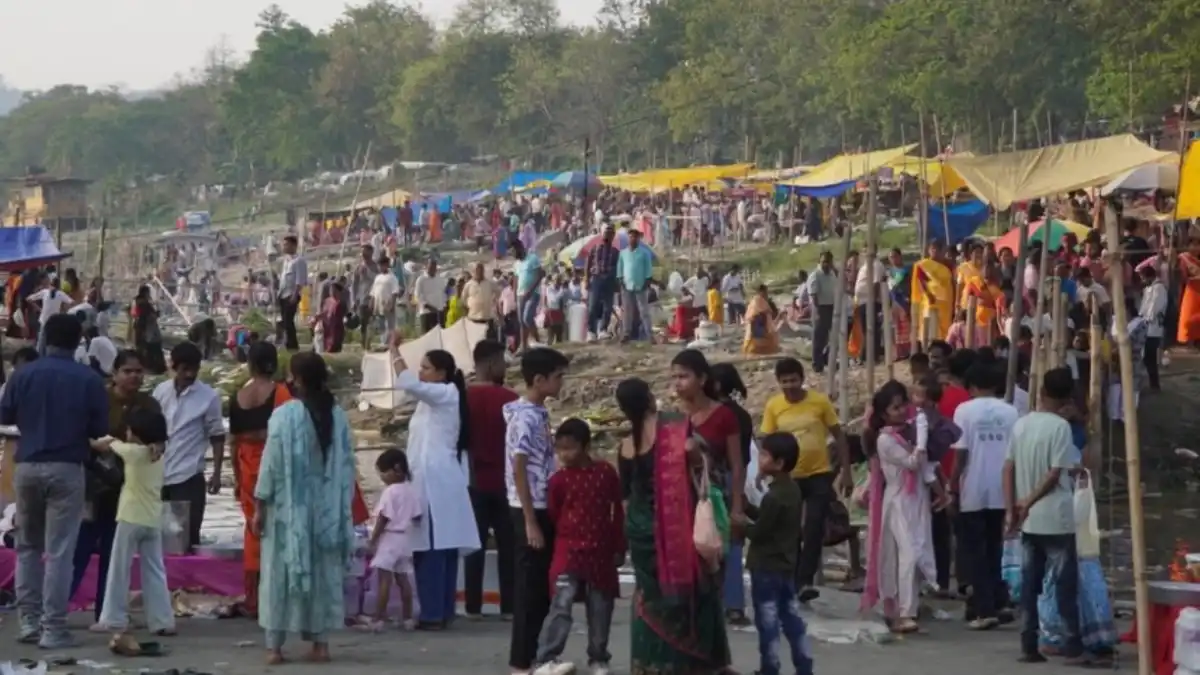
Visuals from the Ashokastami Mela on March 26 captured large gatherings of devotees along the banks of the Brahmaputra River in Guwahati, marking one of the city’s significant religious observances.
People from different parts of Guwahati and nearby areas were seen offering prayers and taking ritual dips in the river as part of the traditional celebrations.
Ashokastami Mela in Guwahati saw devotees gathering along the Brahmaputra River on March 26, offering prayers and taking holy dips as part of the annual religious observance.
Scenes from the Mela
The visuals show:
- Devotees gathering along riverbanks
- Ritual holy dips in the Brahmaputra
- Offerings and prayers performed in groups
- Strong participation from local communities
A Key Religious Event in Guwahati
Ashokastami Mela is observed annually and holds cultural and religious significance in Guwahati.
The festival typically sees:
- Early morning gatherings along the river
- Participation from families and devotees across the city
- Traditional rituals are performed as per local customs
Why It Matters for Guwahati
The mela highlights:
- Guwahati’s deep-rooted religious traditions
- Continued community participation in local festivals
- The cultural importance of the Brahmaputra in daily and spiritual life
Events like Ashokastami reinforce the city’s identity as a centre of faith and tradition in Assam.
What Happens Next
The mela is expected to continue with rituals and gatherings through the day, with authorities monitoring crowd movement and safety along the riverbanks.
Frequently Asked Questions
Q1. What is Ashokastami Mela?
It is a religious festival where devotees gather to offer prayers and take holy dips in the Brahmaputra.
Q2. Where is it celebrated in Guwahati?
Along the banks of the Brahmaputra River.
Q3. Why do devotees take a holy dip?
It is believed to have spiritual significance and is part of traditional rituals.