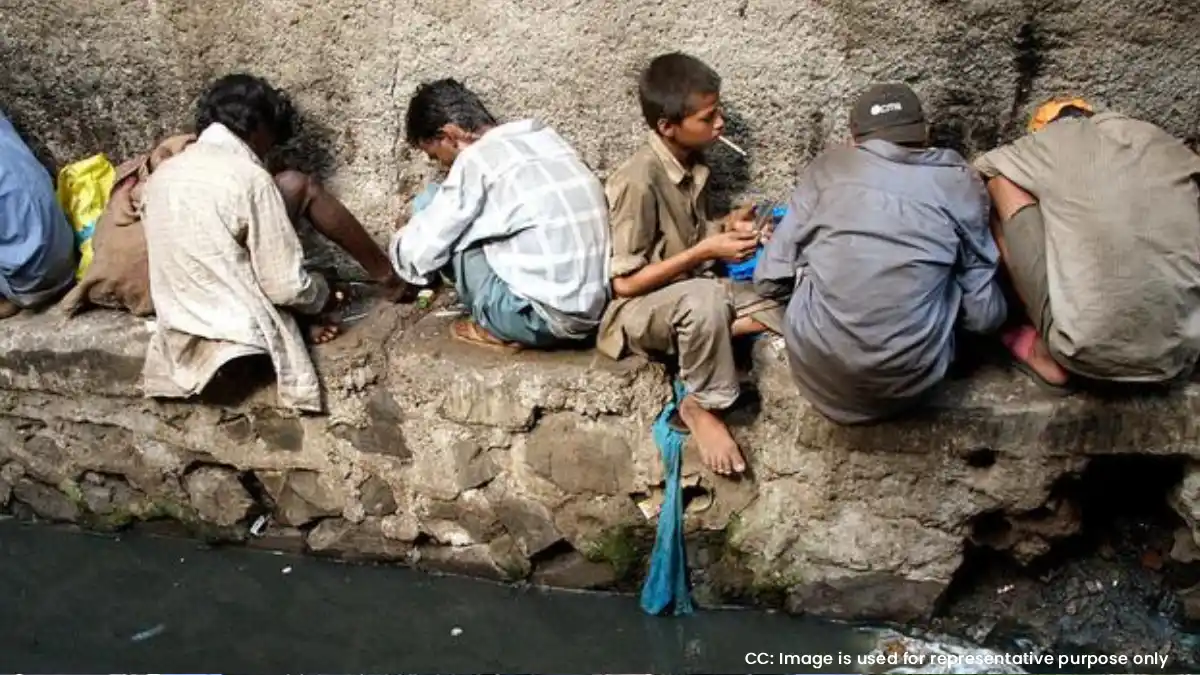
A disturbing scene reported from under a busy flyover in Guwahati has once again brought attention to substance abuse among street children in the city, especially in crowded public areas such as Ulubari.
Three young children were allegedly seen huddled together in broad daylight, inhaling intoxicating substances in the open. The incident has raised concern among residents, parents and commuters about child safety, public health and the normalisation of such sights in the city.
The alleged incident of children inhaling intoxicating substances under a Guwahati flyover highlights a serious child protection and public health concern. Street children in areas such as Ulubari remain vulnerable to substance abuse, neglect, unsafe public spaces and lack of timely intervention from welfare, health and enforcement systems.
For many Guwahati residents, the most troubling part is not only that such incidents happen, but that they often happen in full public view. Traffic continues, shops remain open, commuters pass by, and children in distress become part of the city’s everyday background.
The issue becomes even more sensitive when other children witness such scenes and ask their parents what is happening. It leaves families struggling to explain a reality that should ideally be addressed through protection, counselling and rehabilitation.
Ulubari is one of Guwahati’s busiest commercial and transit areas, with regular movement of office-goers, students, traders, vendors and vehicles. Public spaces under flyovers in such areas often become informal shelter points for vulnerable children, waste collectors, homeless individuals and people without regular access to care.
This is not a new concern for Guwahati. A 2014 study published on substance abuse among street children in Guwahati noted that continuous exposure to street life makes children vulnerable to psychoactive substance use. The study identified inhalant use and other forms of substance abuse as a major concern among children living or working on the streets.
Public discussions around the issue have also repeatedly pointed to glue, adhesives and other inhalants being used by vulnerable children in Guwahati’s streets, markets, railway areas, under bridges and near bus stops. Earlier commentary in The Sentinel described under-flyover spaces and markets as among the unsafe locations where street children are often seen.
Experts often describe inhalant abuse among children as especially dangerous because substances can be cheap, easily available and difficult to monitor. The health risks may include damage to the brain, lungs, heart and nervous system, along with increased vulnerability to violence, exploitation and long-term addiction.
For Guwahati, this is not only a policing issue. It is a child welfare issue involving multiple systems: social welfare departments, child protection units, police, health services, NGOs, schools, ward-level civic bodies and local communities.
The immediate response should focus on identifying vulnerable children, connecting them with child protection services, providing counselling and ensuring safe rehabilitation. Punitive treatment of children alone does not solve the problem; the focus must remain on rescue, care and long-term support.
The public also has a role. Residents should avoid filming or shaming children in such situations. Instead, they should report the matter to child protection authorities, police or recognised child helplines so that trained personnel can intervene.
The next step for Guwahati should be regular outreach in areas such as Ulubari, Paltan Bazaar, Fancy Bazaar, railway-adjacent stretches, bus terminals, markets and spaces under flyovers. These areas need coordinated monitoring, not only during special drives but as part of sustained child welfare work.
For the city, the incident is a reminder that development cannot be measured only through roads, flyovers and buildings. A safer Guwahati must also protect children who are visible in public spaces but often invisible in policy response.
Key Concerns
| Issue | Why It Matters in Guwahati |
|---|---|
| Street child substance abuse | Puts children at serious health and safety risk |
| Under-flyover spaces | Often become informal shelter or gathering points |
| Public normalisation | Repeated exposure can reduce urgency of response |
| Easy access to inhalants | Makes prevention harder without monitoring |
| Lack of rehabilitation | Children may return to unsafe spaces without support |
| Public response | Reporting is safer than filming or ignoring |
Frequently Asked Questions
What was reported under a Guwahati flyover?
Three young children were allegedly seen inhaling intoxicating substances in broad daylight under a busy flyover in Guwahati, raising concern over substance abuse among street children.
Why is child substance abuse a concern in Guwahati?
It is a concern because children living or working on streets are vulnerable to inhalant use, neglect, exploitation, health damage and unsafe public environments.
What should people do if they see children abusing substances?
People should avoid filming or shaming the children. They should inform child protection authorities, police, NGOs working with children, or recognised child helplines for proper intervention.
Why are areas like Ulubari important in this issue?
Ulubari is a busy commercial and transit area with flyovers, traffic movement and public gathering spaces. Such locations can become high-risk zones for vulnerable children if regular outreach and monitoring are missing.