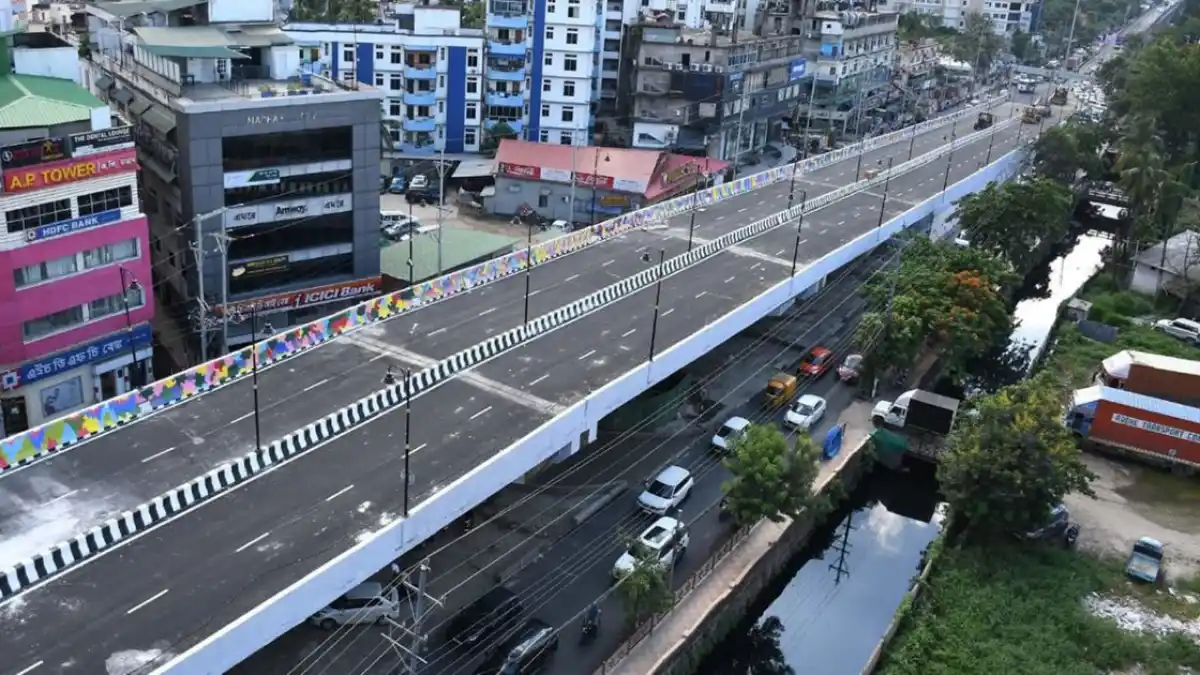
Guwahati’s skyline has changed rapidly over the past two decades, with flyovers, bridges and elevated corridors now shaping several of the city’s busiest traffic junctions. From Ganeshguri and Six Mile to Maligaon, Noonmati and Ulubari, elevated infrastructure has become central to the city’s traffic management strategy.
But as Guwahati rises above congestion, residents continue to face a recurring problem on the ground: waterlogging during the monsoon.
Guwahati’s rapid flyover expansion has helped address traffic congestion in several busy corridors, but recurring waterlogging under and around elevated roads has raised concerns over drainage planning. Residents are now questioning whether the city’s infrastructure growth is keeping pace with stormwater management, road-level design and monsoon preparedness.
The city now has a fast-growing network of flyovers and bridges, with multiple structures either operational or part of ongoing transport upgrades. These projects have been planned to reduce traffic pressure, shorten travel time and improve connectivity across high-density areas.
For daily commuters, flyovers have brought visible relief in several pockets. Earlier traffic bottlenecks at Ganeshguri, Super Market, Six Mile and Maligaon have seen changes in movement patterns after elevated roads were introduced.
However, the problem beneath these structures has become harder to ignore. During heavy rainfall, several stretches under flyovers and near approach roads turn into waterlogged zones, slowing traffic and affecting nearby homes, shops and pedestrians.
The issue is not only about rainwater accumulation. It also points to deeper civic questions around drainage design, road slope, blocked outlets, desiltation, construction debris and maintenance after infrastructure projects are completed.
In many parts of Guwahati, flyover construction has added new concrete surfaces to already dense urban areas. If these projects are not integrated with adequate stormwater channels, rainwater can collect around pillars, service roads and underpass-like sections.
Residents often report that even short spells of rainfall can create traffic chaos in low-lying stretches. Waterlogging near major junctions affects buses, two-wheelers, cars, ambulances, shopkeepers and pedestrians.
The concern becomes sharper during the monsoon, when Guwahati’s drainage system is already under pressure. Natural water channels, wetlands and low-lying drainage routes have been reduced over time due to urban expansion, construction and encroachment.
Flyovers alone do not cause flooding. But when elevated road projects are planned without strong supporting drainage infrastructure, they can worsen existing bottlenecks or expose gaps that were already present.
Urban planners often stress that flyovers should be seen as part of a wider mobility system, not as standalone solutions. A city also needs footpaths, public transport, stormwater drains, traffic discipline, parking management, green spaces and regular maintenance.
For Guwahati, this debate is now urgent. The city faces both rising vehicle pressure and recurring urban flooding. Solving one problem while ignoring the other risks creating a cycle where traffic moves faster above, but public life suffers below.
The way forward will depend on integrated planning. Every new flyover or bridge should include drainage audits, water-flow mapping, service road planning, pedestrian safety checks and long-term maintenance responsibility.
Existing flyovers may also need post-construction review before every monsoon. Authorities will have to identify waterlogging points, clean drains before peak rainfall, remove debris, and ensure that water has a clear exit route.
The public also has a role. Garbage dumping into drains, plastic waste, construction waste and blocked outlets worsen flooding in many areas. Without citizen cooperation, even improved drains can fail during heavy rain.
Guwahati’s infrastructure boom is important, but the next stage of development must answer a more practical question: can the city build upward without neglecting what happens at ground level?
For residents, the issue matters because the success of urban infrastructure is not measured only by the number of flyovers built. It is measured by whether roads remain usable, neighbourhoods stay safe, and daily life continues smoothly when the rains arrive.
Key Urban Concerns
| Issue | Why It Matters for Guwahati |
|---|---|
| Flyover expansion | Helps ease traffic at major junctions |
| Waterlogging below structures | Disrupts commuters, shops and pedestrians |
| Drainage gaps | Causes repeated flooding during rain |
| Service road design | Affects local movement below flyovers |
| Maintenance | Decides whether infrastructure works long-term |
| Waste in drains | Blocks rainwater flow and worsens flooding |
Frequently Asked Questions
Are flyovers causing waterlogging in Guwahati?
Flyovers alone do not cause waterlogging, but poor drainage planning around flyovers, blocked outlets, concrete-heavy surfaces and weak maintenance can worsen existing flooding problems.
Why does Guwahati flood after short rainfall?
Guwahati often floods after short rainfall due to drainage congestion, blocked drains, low-lying roads, reduced natural water channels, construction debris and rapid urban expansion.
Have flyovers helped Guwahati traffic?
Yes, flyovers have helped reduce congestion in several busy corridors. However, traffic relief must be matched with drainage, pedestrian safety and service road planning.
What should be done before building more flyovers?
Authorities should conduct drainage audits, water-flow mapping, service road planning, pedestrian safety checks and monsoon-readiness reviews before and after every major flyover project.