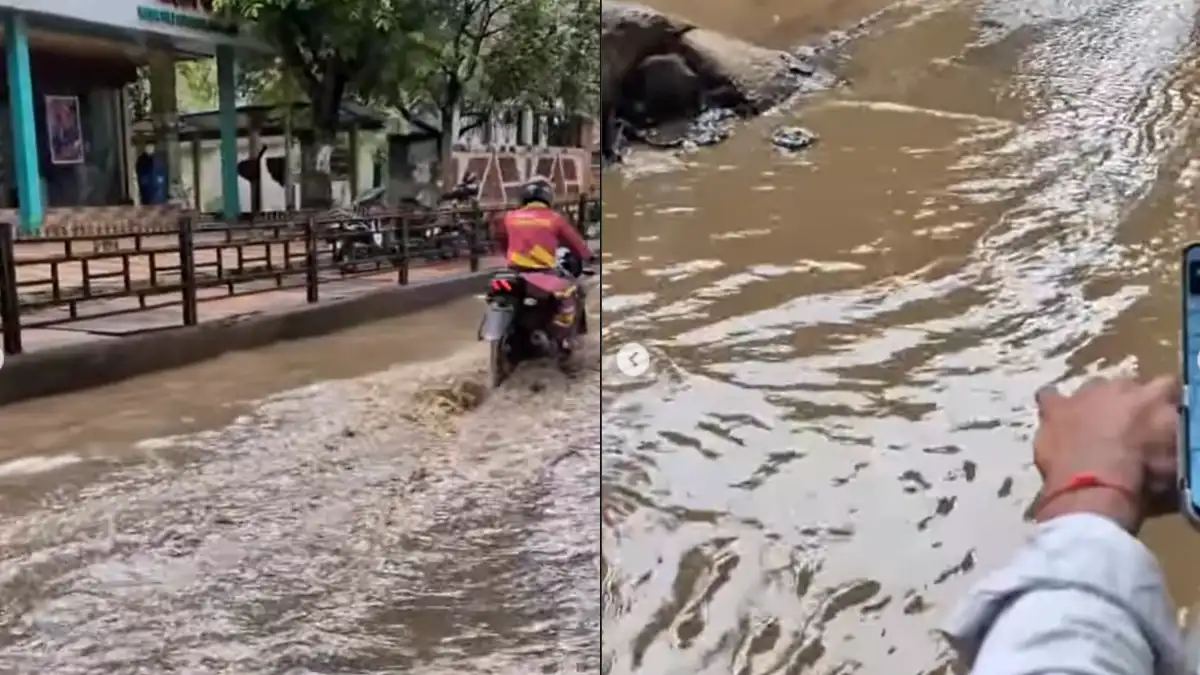
Just an hour of rainfall on Saturday, May 23, led to severe waterlogging on GNB Road in Guwahati, causing traffic congestion and inconvenience for commuters, shopkeepers and local residents.
The incident has again raised questions over the city’s drainage preparedness, especially as saucer drain construction is already underway along the stretch to improve rainwater flow and reduce stagnation.
GNB Road in Guwahati faced severe waterlogging after about one hour of rainfall on May 23, disrupting traffic and daily movement. Residents said the ongoing saucer drain construction has helped only in a few pockets, while most parts of the road continue to flood during heavy rain due to drainage gaps and clogged waste.
Speaking to GPlus, a local resident said the drainage situation has not improved significantly despite the construction work. According to the resident, a few areas saw reduced water accumulation, but most stretches of the road continued to face waterlogging during heavy rain.
The resident also pointed to public behaviour as part of the problem, saying garbage and waste often block drains and worsen the situation during rainfall. This remains one of Guwahati’s recurring civic challenges, where infrastructure work and public waste disposal habits both affect drainage outcomes.
The newly built saucer drains are expected to create a smoother channel for rainwater, allowing it to flow out more efficiently and preventing stagnation on the road. However, Saturday’s rainfall showed that the stretch continues to remain vulnerable to urban flooding.
GNB Road is one of Guwahati’s important city roads, connecting busy neighbourhoods, institutions, offices, commercial points and residential areas. Waterlogging on this stretch can quickly slow traffic movement and affect commuters travelling through central parts of the city.
For pedestrians, waterlogged stretches create additional risks. Open drains, uneven road surfaces, hidden potholes and passing vehicles can make movement unsafe during sudden rain.
The problem is not limited to GNB Road. Guwahati has repeatedly faced waterlogging in several pockets after intense rainfall. Earlier this season, several parts of the city were inundated after 35.5 mm of rainfall, with commuters reporting difficulty in areas including Noonmati, Rukmini Nagar, Chandmari and Satgaon. Residents had also pointed to drains clogged with plastic waste as a major reason for flooding.
The issue has also reached the Gauhati High Court. In May, the Court took serious note of recurring artificial floods and unsafe open manholes across Guwahati, directing the government to take immediate measures to secure hazardous drains and file a detailed affidavit on steps taken and proposed measures.
At the same time, pre-monsoon drain desiltation has been taken up in parts of the city’s highway network. The National Highways Authority of India recently began drain desiltation along the Jalukbari-Jorabat stretch to restore water flow and reduce waterlogging during the monsoon season.
The latest situation on GNB Road shows that Guwahati’s drainage challenge needs both infrastructure completion and consistent maintenance. Saucer drains may help only if connected drainage channels remain clear, waste is removed regularly, and rainwater has an uninterrupted exit route.
The next step will be closer monitoring of the ongoing drain work and faster clearance of clogged sections before heavier monsoon rainfall. For residents, the issue matters because even short rainfall spells can disrupt traffic, damage public movement and expose gaps in the city’s civic preparedness.
Key Details
| Detail | Information |
|---|---|
| Location | GNB Road, Guwahati |
| Date | May 23 |
| Trigger | Around one hour of rainfall |
| Impact | Severe waterlogging and traffic congestion |
| Ongoing work | Saucer drain construction |
| Resident concern | Drainage has improved only in some pockets |
| Key issue | Waste and garbage clogging drains |
| Public relevance | Commuter delays, pedestrian risk and urban flooding |
Frequently Asked Questions
Why did GNB Road get waterlogged after one hour of rain?
GNB Road faced waterlogging because rainwater could not drain out efficiently. Residents said ongoing saucer drain work has helped only in some areas, while clogged waste and drainage gaps continue to cause flooding.
What are saucer drains?
Saucer drains are shallow, open drainage channels designed to guide rainwater away from roads and prevent stagnation. Their effectiveness depends on proper construction, connection to larger drains and regular cleaning.
Is waterlogging common in Guwahati?
Yes. Guwahati often faces waterlogging in several areas during heavy rainfall due to drainage limitations, clogged drains, low-lying roads and rapid urban expansion.
What can residents do to reduce waterlogging?
Residents can avoid dumping plastic, garbage and construction waste into drains. Clear drains and responsible waste disposal can help reduce blockage and improve rainwater flow.