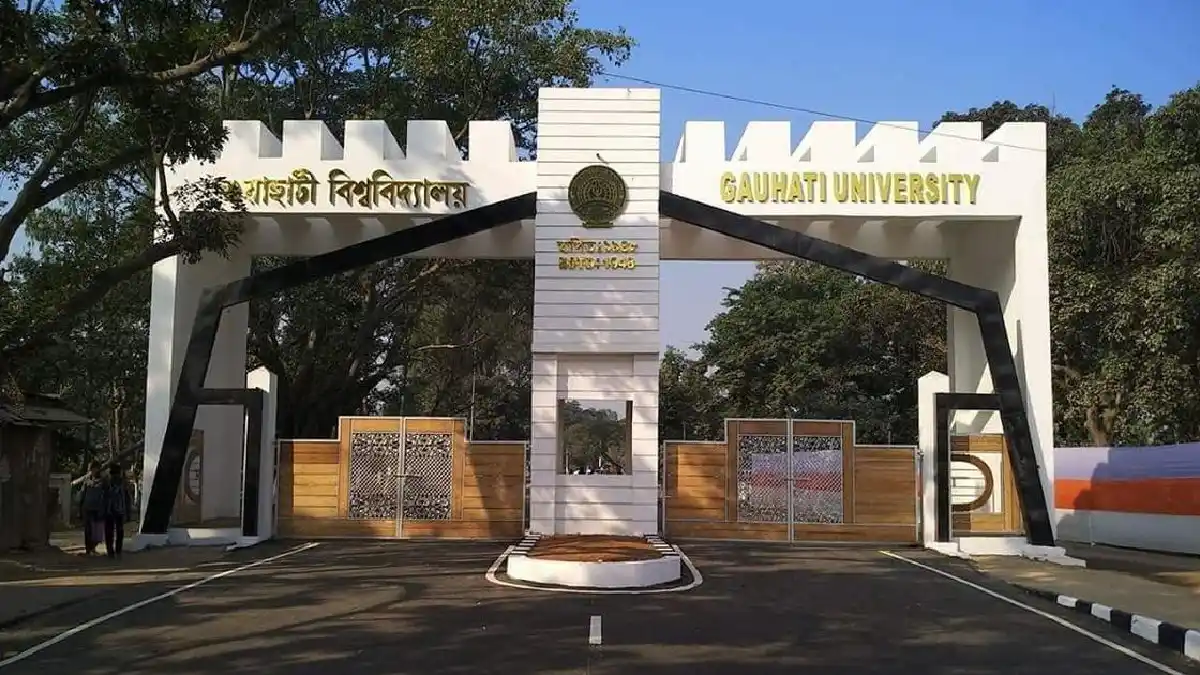
A Bodo translation of a literary work by noted Assamese writer Dr Bhabendra Nath Saikia was officially released at Gauhati University during a programme organised by the Department of Modern Indian Languages and Literary Studies.
The translated book, titled Ansula Afa, has been translated into Bodo by research scholar Udangsri Boro. The initiative aims to strengthen literary and cultural exchange between the Assamese and Bodo languages through translation.
The Bodo translation of Dr Bhabendra Nath Saikia’s literary work was released at Gauhati University in Guwahati. Titled Ansula Afa, the book has been translated by research scholar Udangsri Boro and is being seen as an important step in promoting Assamese-Bodo literary dialogue and cultural understanding.
The release at Gauhati University gives the initiative a strong Guwahati connection, as the university remains one of Assam’s key centres for language studies, literary research and cultural scholarship. The Department of Modern Indian Languages and Literary Studies hosted the programme, bringing together teachers, researchers, students and literary enthusiasts.
Speaking at the event, Padma Shri awardee Professor Anil Kumar Boro praised the translation effort and said translation plays an important role in connecting different literary traditions and cultures. He highlighted that Dr Saikia’s works are deeply rooted in social realities and human emotions.
Dr Bhabendra Nath Saikia remains one of Assam’s most respected literary and cultural figures. His writings are known for sensitive portrayals of everyday life, human relationships, social conditions and moral complexities. Translating his work into Bodo allows a wider group of readers to engage with his literary world in their own language.
Faculty members, including Professor Swarna Prabha Chainary and Professor Dilip Bora, also appreciated the work and described the translation as a meaningful contribution to cultural harmony between Assamese and Bodo communities.
For Guwahati’s academic and literary circles, the event is significant because the city has long served as a meeting point for Assam’s diverse linguistic and cultural traditions. Gauhati University, in particular, has played an important role in encouraging research, translation and dialogue across communities.
The translation of Assamese literary works into Bodo can help readers access shared social, emotional and cultural themes across languages. It also supports the preservation and growth of regional literature by making important works available beyond their original linguistic audience.
The event also underlined the role of young researchers in carrying forward literary exchange. By translating Dr Saikia’s work, Udangsri Boro has contributed not only to Bodo literature but also to the wider conversation around multilingual reading in Assam.
In a state with multiple languages and communities, translation is more than a literary exercise. It becomes a bridge between histories, identities and lived experiences. The release of Ansula Afa reflects that broader cultural purpose.
The next step will be a wider readership and academic discussion around the translated work. For Guwahati and Assam’s literary community, the release matters because it reinforces the importance of language, translation and cultural understanding in a multilingual society.
Key Details
| Detail | Information |
|---|---|
| Book title | Ansula Afa |
| Original author | Dr Bhabendra Nath Saikia |
| Translated into | Bodo |
| Translator | Udangsri Boro |
| Venue | Gauhati University, Guwahati |
| Organiser | Department of Modern Indian Languages and Literary Studies |
| Focus | Assamese-Bodo literary and cultural exchange |
Frequently Asked Questions
What is Ansula Afa?
Ansula Afa is the Bodo translation of a literary work by noted Assamese writer Dr Bhabendra Nath Saikia.
Who translated Dr Bhabendra Nath Saikia’s work into Bodo?
The work was translated into Bodo by research scholar Udangsri Boro.
Where was the translated book released?
The translated book was released at Gauhati University in Guwahati during a programme organised by the Department of Modern Indian Languages and Literary Studies.
Why is this translation important?
The translation is important because it helps connect Assamese and Bodo literary traditions and promotes cultural understanding between the two communities.