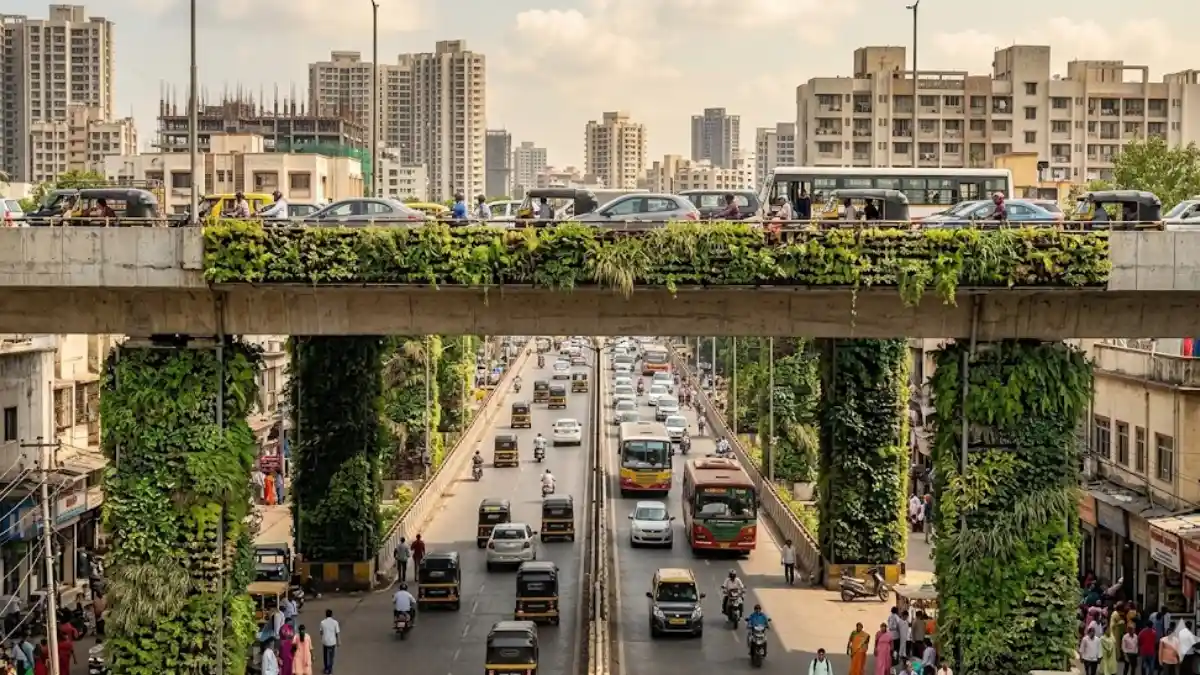
The Assam Government has announced plans to introduce vertical gardens across 20 major flyovers and urban corridors in Guwahati, aiming to add more green infrastructure to the city’s growing concrete landscape.
The initiative will cover nearly 8,000 square metres of existing concrete structures and convert them into vertical green spaces. The move is being positioned as part of Guwahati’s next phase of urban modernisation and Ease of Living improvement.
Guwahati is set to get vertical gardens across 20 flyovers and major corridors, with nearly 8,000 square metres of concrete structures planned for greening. The Assam Government says the initiative aims to improve urban greenery, reduce heat, support air quality, and make the city’s transport corridors more environmentally friendly.
The project is expected to focus on key flyovers and road corridors that carry heavy traffic and have become prominent features of Guwahati’s urban landscape. The plan follows earlier discussions around making city flyovers greener, with the Guwahati Municipal Corporation reportedly working on green corridor proposals for major flyovers, including areas such as Ganeshguri, Ulubari, and Super Market.
For Guwahati, the proposal comes at a time when the city is rapidly expanding as the commercial and administrative centre of Assam. Flyovers have become essential to traffic movement, but they have also added large stretches of exposed concrete across busy neighbourhoods.
The vertical gardens are expected to help soften the visual impact of these structures while adding greenery to areas where traditional ground-level planting may be limited. Officials have linked such greening efforts with better urban aesthetics, pollution control, and sustainable city planning.
Vertical gardens are generally designed by placing plants along walls, pillars, railings, or other vertical surfaces. In a dense city like Guwahati, this allows greenery to be added without requiring large open land parcels.
The government’s plan also aligns with the broader vision of Guwahati’s smart city development, which includes improving public spaces, reconnecting the city with its natural assets, and creating a more sustainable urban environment. Guwahati Smart City Limited lists long-term sustainable measures, improved public realm, and greenways among its urban development goals.
The proposed green spaces may contribute to reducing surface heat around concrete-heavy areas, improving the visual experience for commuters and supporting limited air-quality benefits through urban vegetation. However, the long-term success of the project will depend on plant selection, irrigation, maintenance, dust management, and regular monitoring.
Maintenance will be a key public concern. Guwahati’s climate, high dust levels, traffic pollution, and seasonal rainfall can affect the survival of plants on exposed flyover structures. Without regular care, vertical gardens can lose their visual and environmental value over time.
The project also comes in the larger context of Guwahati’s need for more urban green spaces. Existing green areas, such as the Assam State Zoo cum Botanical Garden, are described by the state forest department as a “green lung” for the growing city, while newer spaces, such as the Fancy Bazar Botanical Garden, have been developed to improve urban greenery in dense areas.
For residents, the project matters because it targets everyday public spaces rather than isolated parks. If implemented and maintained properly, the vertical gardens could make daily commute routes visually cleaner and more climate-responsive.
The next step will be the detailed execution of the project across the identified flyovers and corridors. The public will be watching how the government manages installation, maintenance, and long-term plant survival, as these factors will decide whether the project becomes a lasting green upgrade or only a short-term beautification exercise.
Key Details
| Point | Details |
|---|---|
| Project | Vertical gardens across Guwahati flyovers and corridors |
| Coverage | Nearly 8,000 square metres |
| Locations | 20 major flyovers and urban corridors |
| Objective | Improve green infrastructure and Ease of Living |
| Expected benefits | Better aesthetics, reduced heat, improved greenery, air-quality support |
| Key concern | Long-term maintenance and plant survival |
Frequently Asked Questions
What is the vertical garden project in Guwahati?
The Assam Government plans to develop vertical gardens across 20 major flyovers and corridors in Guwahati. Nearly 8,000 square metres of concrete structures are expected to be converted into green spaces.
Why are vertical gardens being planned on Guwahati flyovers?
The project aims to increase urban greenery, reduce the visual impact of concrete structures, support air-quality improvement and contribute to a more sustainable urban environment.
Will vertical gardens reduce heat in Guwahati?
Vertical gardens may help reduce surface heat around concrete structures to some extent. However, their actual impact will depend on plant type, coverage, maintenance and local environmental conditions.
What will decide the success of the project?
The success of the project will depend on proper plant selection, irrigation, dust control, maintenance and regular monitoring after installation.