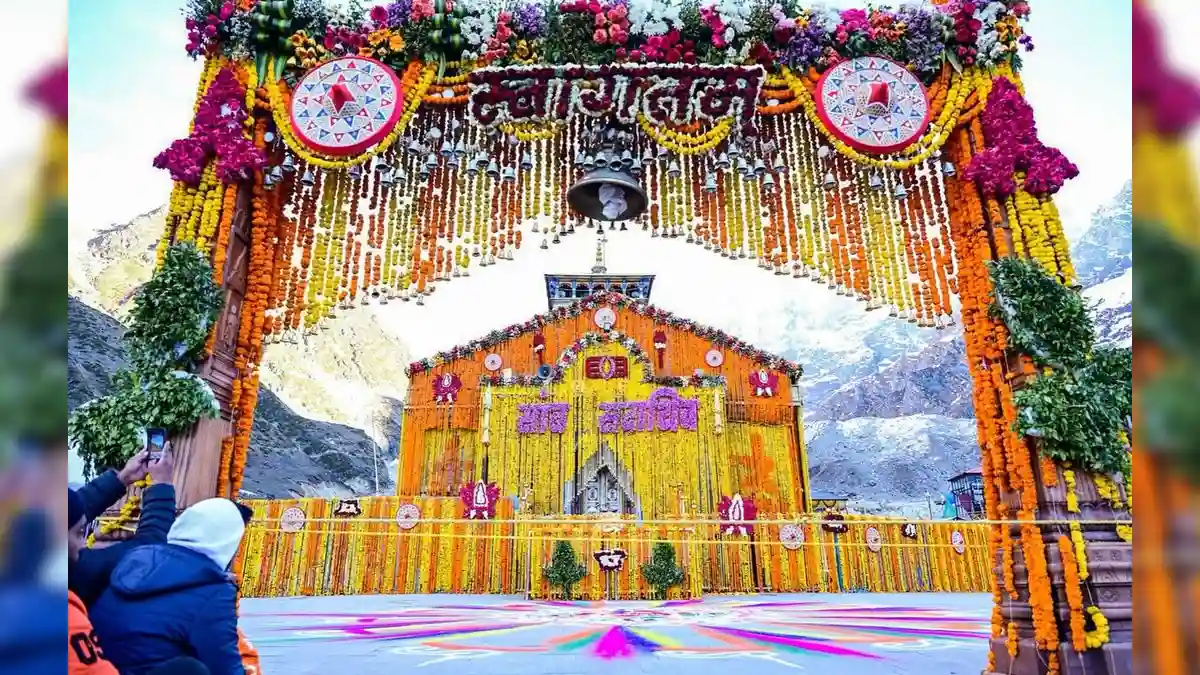
Kedarnath Temple reopened for the annual Char Dham pilgrimage season on Wednesday, April 22, welcoming thousands of devotees to the Himalayan shrine in Uttarakhand. The reopening marks the beginning of one of India’s most significant religious journeys.
This year, the occasion once again featured a cultural connection to Assam, as traditional Assamese Jaapi were placed at the temple entrance. The symbolic gesture created a distinctive visual welcome for pilgrims arriving at the sacred site.
Kedarnath Temple reopened on April 22 for the Char Dham Yatra, drawing thousands of devotees. Assamese Jaapi were placed at the temple entrance as part of the welcome, highlighting Assam’s cultural presence at the shrine and continuing a tradition seen in recent years.
Spiritual Season Begins in Kedarnath
The reopening of Kedarnath Temple follows its annual winter closure due to extreme weather conditions. With the temple doors now open, devotees from across India have begun arriving for darshan.
Located in the Garhwal Himalayas, Kedarnath is one of the 12 Jyotirlingas of Lord Shiva and holds immense religious significance. The pilgrimage typically continues for several months, depending on weather conditions.
Assamese Jaapi Adds Cultural Symbolism
One of the most notable visuals from the reopening was the presence of Assamese Jaapi at the temple entrance. The Jaapi, a traditional handwoven bamboo and cane hat, is widely recognized as a cultural symbol of Assam.
Placed at the gateway, the Jaapi served as a welcoming element for pilgrims, blending regional identity with a national spiritual event. The gesture reflects how cultural traditions from different parts of India are represented at prominent religious sites.
Continued Cultural Association
The inclusion of Assamese Jaapi at Kedarnath has been observed in recent years, indicating an ongoing cultural association. While the temple remains rooted in Uttarakhand’s traditions, such gestures highlight the diversity of contributions from across states.
For Assam, the presence of the Jaapi at a nationally significant pilgrimage site offers cultural visibility and representation on a broader stage.
Significance for Devotees
As thousands of pilgrims gather at Kedarnath, the reopening marks not just a religious milestone but also a moment of unity across regions. The integration of cultural symbols like the Jaapi adds a unique dimension to the pilgrimage experience.
Devotees arriving at the temple are greeted with both spiritual and cultural elements, reinforcing the inclusive nature of India’s religious traditions.
What Happens Next
The Char Dham Yatra will continue over the coming months, with authorities managing pilgrim flow, safety, and logistics in the high-altitude region.
For Assam, the continued presence of the Jaapi at Kedarnath strengthens its cultural footprint in national religious spaces, offering both recognition and a sense of connection for people from the state.
Frequently Asked Questions
When did Kedarnath Temple reopen in 2026?
Kedarnath Temple reopened on April 22, marking the start of the annual Char Dham pilgrimage season.
What is the significance of the Assamese Jaapi at Kedarnath?
The Jaapi symbolizes Assam’s cultural heritage and is placed at the temple entrance as a welcoming gesture, reflecting regional representation at a national pilgrimage site.