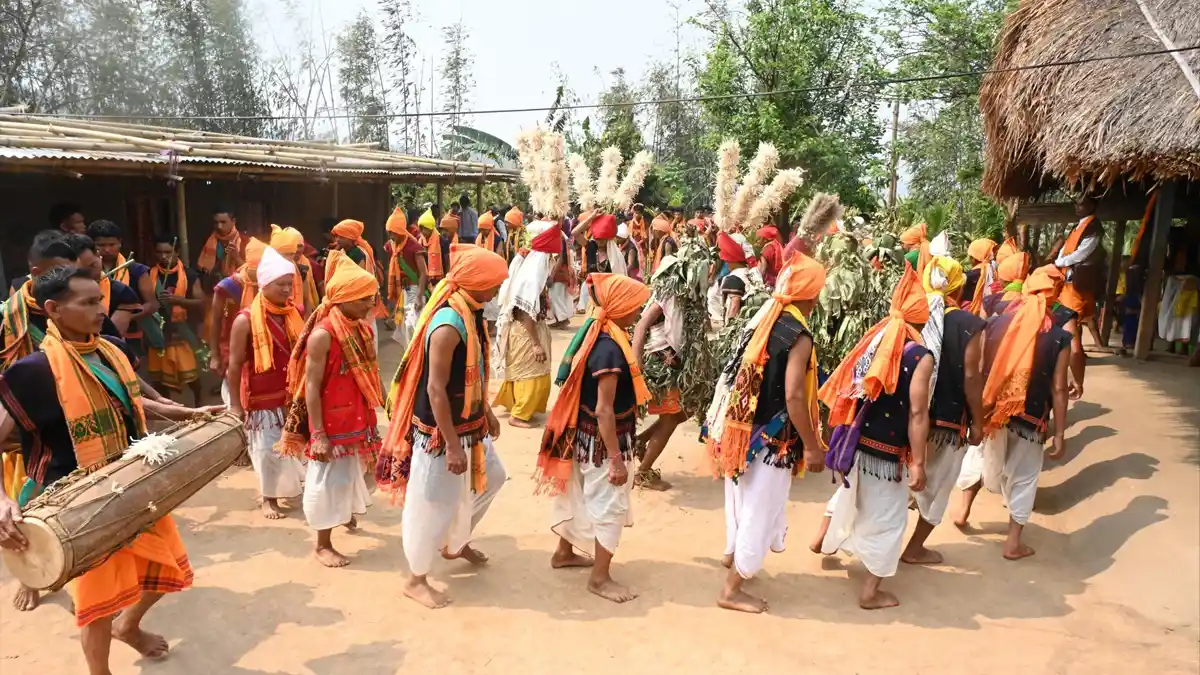
Festivities for the centuries-old Jonbeel Mela began today near Jagiroad in Morigaon district, marking the start of a three-day traditional fair of the Tiwa community, held alongside the historic Jonbeel wetland. The fair is known for preserving ancient barter practices and indigenous customs that continue to draw participants and visitors from across Assam.
The annual Jonbeel Mela is organised near the moon-shaped wetland locally known as Jonbeel, close to Jagiroad town. Rooted in Tiwa (Lalung) heritage, the fair traditionally begins on Magh Sankranti and serves as a rare living example of pre-monetary economic exchange and community governance.
Jonbeel Mela, a centuries-old traditional fair of the Tiwa community, has begun near Jagiroad in Assam’s Morigaon district. Held beside the moon-shaped Jonbeel wetland, the three-day event is known for its unique barter system, cultural rituals, and participation of tribal communities from across the region.
What Makes Jonbeel Mela Unique
Unlike conventional fairs, Jonbeel Mela is globally recognised for its barter system, where hill tribes and plains communities exchange goods such as vegetables, fish, handmade items, and agricultural produce without using money. This practice is believed to date back several centuries and remains central to the fair.
Another key feature is the ceremonial involvement of the Gova Raja (traditional Tiwa king) and his council, who symbolically uphold indigenous self-governance during the event. Community feasts, traditional dances, and folk music further define the cultural atmosphere of the mela.
Location and Local Significance
The fair is held near Jonbeel, a natural wetland shaped like a crescent moon, situated close to Jagiroad in Morigaon district.
For local residents, Jonbeel Mela is more than a cultural event; it is a symbol of continuity, identity, and coexistence between hill and plains communities. The fair also contributes to seasonal economic activity in the Jagiroad region through local trade and tourism.
Key Highlights of Jonbeel Mela
- Traditional barter exchange without currency
- Participation of Tiwa, Karbi, Khasi, and other communities
- Ceremonial role of the Tiwa king and council
- Folk performances, community feasts, and rituals
- Strong cultural and historical relevance to Assam
What Happens Next
The Jonbeel Mela will continue over the next two days with peak barter activities, cultural programmes, and traditional ceremonies scheduled throughout the fair period. Local administration is expected to maintain crowd management and basic facilities as footfall increases.
The event holds importance not only as a cultural festival but also as a reminder of sustainable community practices and Assam’s diverse indigenous heritage.
Frequently Asked Questions
What is Jonbeel Mela famous for?
Jonbeel Mela is famous for its traditional barter system, where goods are exchanged without money, a practice that has survived for centuries among the indigenous communities of Assam.
Where is Jonbeel Mela held?
Jonbeel Mela is held near the Jonbeel wetland, close to Jagiroad town in Morigaon district of Assam.