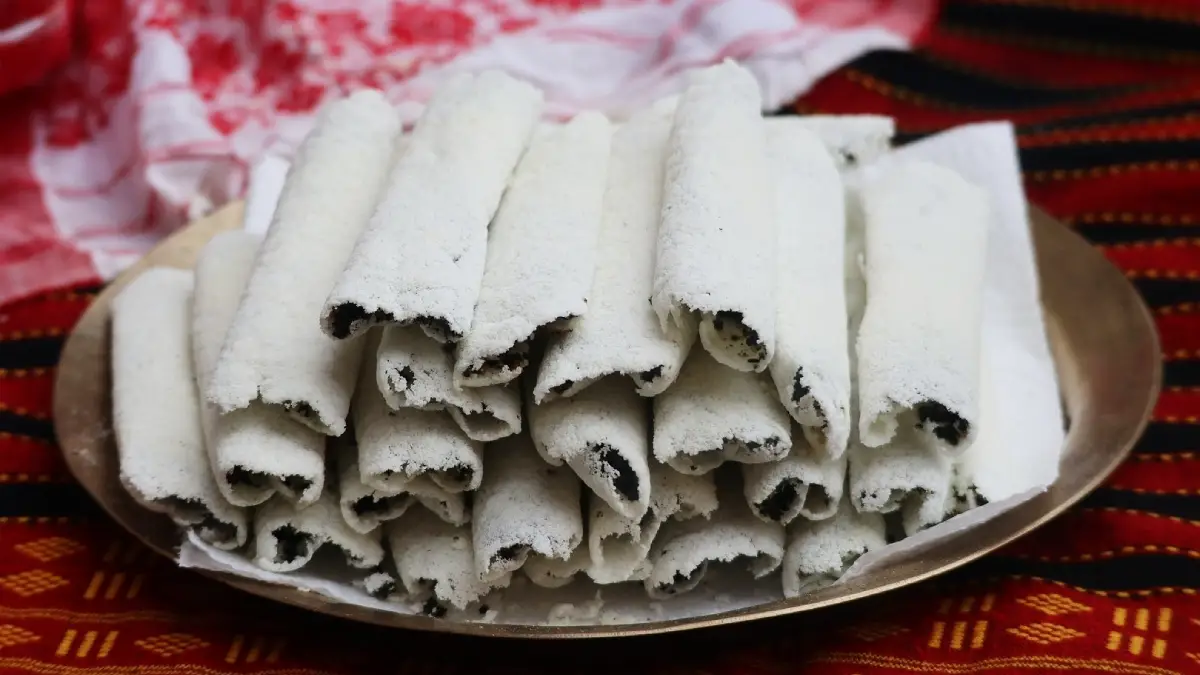
In Assam, rice is not just food. It is what people wake up to, what they offer the fire during rituals, and what anchors festivals like Bihu to everyday life. From paddy fields to kitchen courtyards, rice moves through careful processes, soaked, roasted, ground, puffed, or flattened, becoming forms that carry memory, labour, and identity.
During Bhogali Bihu especially, rice takes centre stage, not as a single dish but as a collection of preparations shaped by agrarian life and seasonal rhythm.
In Assam, rice forms the cultural and culinary core of Bihu and daily life. Prepared as seera, pitha guri, aakhoi, kumol saul, bora saul and more, rice reflects generations of food knowledge, seasonal practices, and agrarian traditions that continue to define Assamese identity.
Seera: The Day Begins with Rice
Seera, or flattened rice, is often the first food many Assamese households reach for during Bihu mornings. Made by roasting rice and flattening it using a dheki, seera is eaten with curd and jaggery, or sometimes simply on its own.
Once a common household practice across villages, seera reflects how rice was adapted into quick, nourishing food long before modern convenience entered kitchens.
Xandoh Guri: Slow Food by Design
Xandoh guri, roasted rice flour, represents patience in Assamese cooking. Rice is boiled, dried, roasted, and then ground until it turns warm and nutty. During Bihu, it is eaten simply mixed with water, milk, or jaggery.
The process itself reflects a food culture where preparation mattered as much as consumption.
Pitha Guri: Where Rice Becomes Celebration
With pitha guri, rice turns festive. This fine rice flour becomes til pitha, narikol pitha, tekeli pitha, and many more. Families gather around hot pans, sharing work and conversation as pithas are prepared together.
Pitha-making is not just about food; it is one of the few moments where generations come together around a shared task.
Aakhoi: Rice at Its Most Playful
Aakhoi, or puffed rice, is made by popping rice in hot sand, producing a sharp crackle and sudden bloom. Light to eat, it is often mixed with jaggery and shared during Uruka nights.
Though simple, aakhoi carries strong associations with childhood, celebration, and informal sharing.
Kumol Saul: Convenience Rooted in Tradition
Kumol saul, or soft rice, requires no cooking. Soaked briefly and eaten with cream, curd, or jaggery, it reflects a food culture shaped by agrarian life, where nourishment needed to be quick and practical.
It remains one of Assam’s most distinctive rice traditions.
Magh Kori Guri: Gratitude Before Celebration
Prepared in advance, Magh kori guri is a mix of roasted grains, pulses, sesame, coconut, rice, and ginger. During the Meji ritual, a portion is offered to the fire before anyone eats.
The gesture reflects an agrarian value system acknowledge the harvest first, celebrate later.
Bora Saul: The Backbone of Bhogali Bihu
Bora Saul, sticky rice, holds pithas together literally and culturally. Used in til pitha and narikol pitha, it gives Bhogali Bihu its texture and substance.
Without Bora Saul, Bihu food feels incomplete.
Black Rice: Reserved for Time and Occasion
Dark, aromatic black rice is usually used for kheer or haaj. It takes longer to cook and is therefore reserved for festivals or occasions when time allows slow preparation.
Its presence reflects how certain foods are tied to patience and ritual rather than routine.
Why This Matters
From paddy to plate, rice in Assam is never accidental. Each form flattened, roasted, puffed, or soaked represents a method refined over generations. In Guwahati and across Assam, these traditions continue even as lifestyles change.
Bihu, especially Bhogali Bihu, is where these practices become most visible, where rice stops being just food and becomes memory, community, and continuity.
What Happens Next
As Bihu celebrations continue, these rice traditions will return to kitchens, courtyards, and community spaces. Passed quietly from one generation to the next, they remain one of the strongest links between Assam’s past and present.
Frequently Asked Questions
Q1. Why is rice so important in Assamese culture?
Rice shapes daily meals, festivals, and rituals in Assam, reflecting the state’s agrarian history and food traditions.
Q2. What are common rice preparations during Bhogali Bihu?
Seera, pitha guri, aakhoi, kumol saul, bora saul, xandoh guri, and Magh kori guri are widely prepared during Bhogali Bihu.