Guwahati has witnessed a visible push in infrastructure development in recent months, with projects like the Kumar Bhaskar Varma Setu, Maharaj Prithu Overbridge, and new additions such as Jyoti Bishnu Auditorium, Ekta Mall, and Science City reshaping the city’s urban landscape.
While these developments reflect a broader vision under Himanta Biswa Sarma to modernise the city, the everyday commuting experience for residents in Guwahati continues to present a different reality.
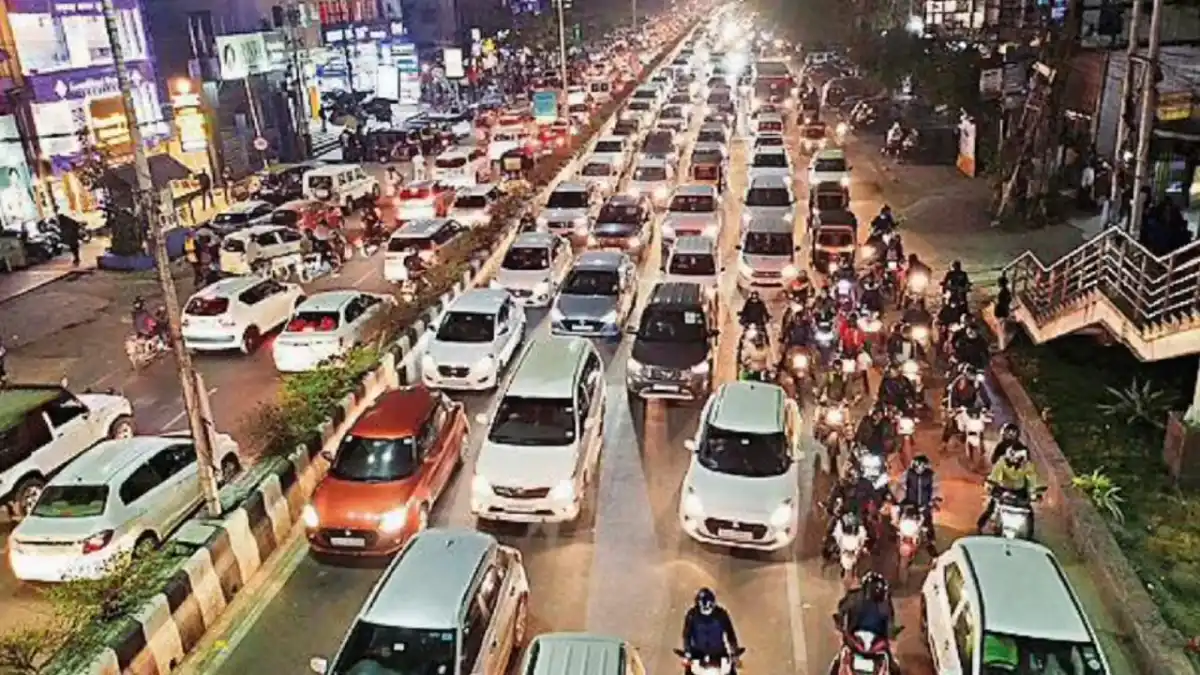
Despite recent infrastructure developments in Guwahati, including new bridges and urban projects, traffic congestion remains a major issue. A 5 km journey can take up to 45 minutes during peak hours due to rising vehicle numbers, weak traffic discipline, and limited expansion of road and parking infrastructure.
Infrastructure Growth Across the City
Recent projects highlight a strong push towards urban expansion and modernisation:
- Improved connectivity between Guwahati and North Guwahati
- Expansion of flyovers and traffic corridors
- New public infrastructure for culture, commerce, and science
These initiatives aim to support the city’s rapid growth and future needs.
Daily Commute Tells a Different Story
Despite these upgrades, traffic congestion remains a daily challenge.
For example:
- A 5 km stretch from Ulubari to GS Road can take up to 45 minutes during peak hours
- Ideal travel time under free-flow conditions would be 10–15 minutes
Such delays have become common, especially during office hours and evening rush periods.
Why Traffic Is Getting Worse
The issue extends beyond just an increase in vehicles. Key contributing factors include:
- Rapid growth in private cars and two-wheelers
- Limited expansion of road capacity and parking infrastructure
- Weak traffic discipline and enforcement
- Lack of a coordinated urban mobility system
Even minor disruptions—such as a stalled vehicle or improper parking, can trigger widespread congestion.
The Growing Gap in Urban Planning
Over the past decade, vehicle registrations in Guwahati have more than doubled. However, supporting infrastructure has not expanded at the same pace.
This mismatch has led to:
- Longer travel times
- Increased pressure on road safety systems
- Higher fuel consumption and commuter fatigue
The gap between growth and planning is now clearly visible in everyday traffic conditions.
What Happens Next
As Guwahati continues to expand, addressing traffic and mobility challenges will be critical. Experts often point to the need for:
- Better traffic management systems
- Improved public transport options
- Structured parking solutions
- Stronger enforcement of traffic rules
For residents, the coming years will determine whether infrastructure growth can translate into smoother daily mobility.
Frequently Asked Questions
Q1. Why is traffic congestion increasing in Guwahati?
Due to rapid vehicle growth, limited road expansion, weak traffic discipline, and a lack of coordinated mobility planning.
Q2. How long does it take to travel short distances in Guwahati?
A 5 km stretch can take up to 45 minutes during peak hours.
Q3. What are the recent infrastructure developments in Guwahati?
Projects include Kumar Bhaskar Varma Setu, Maharaj Prithu Overbridge, and new facilities like Science City and Ekta Mall.