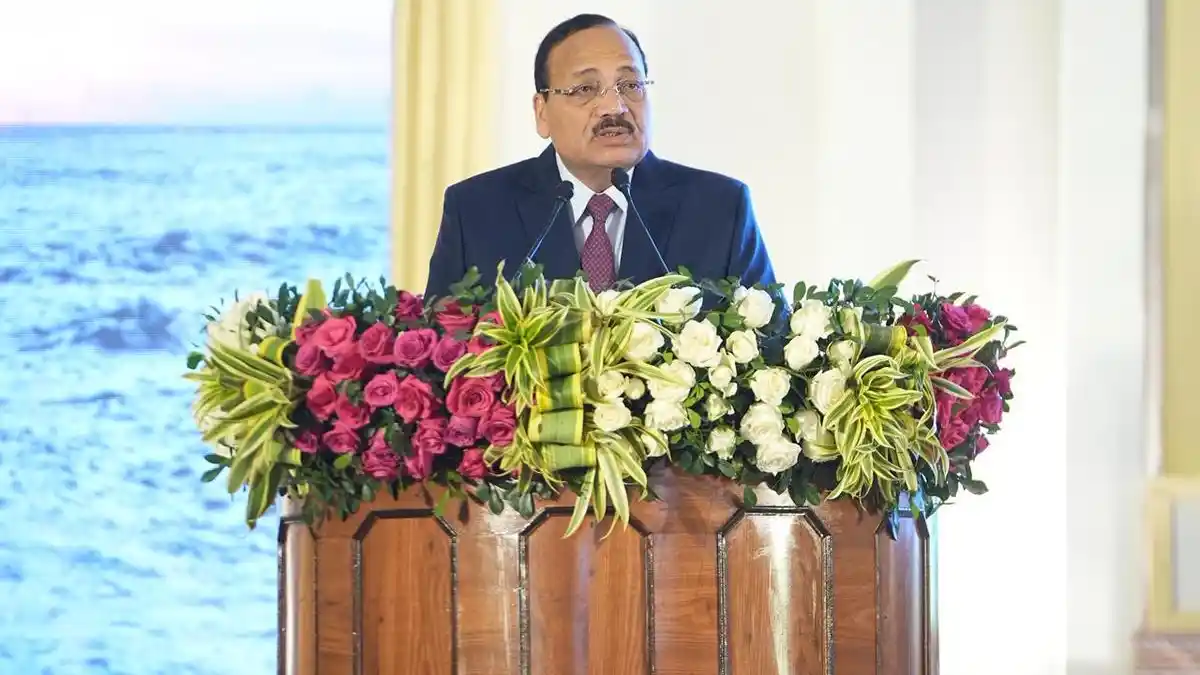
The foundation stone for a new Gauhati High Court complex was laid on Sunday at Amingaon in North Guwahati by Justice Surya Kant, even as lawyers continued to oppose the proposed relocation of the court from its present site in Uzan Bazar.
The ceremony marked the formal start of construction for a new judicial complex planned by the Assam government, while members of the Gauhati High Court Bar Association maintained their protest, including a boycott of official events linked to the project.
Chief Justice of India Justice Surya Kant laid the foundation stone for a new Gauhati High Court complex at Amingaon in North Guwahati. The move comes amid continued protests by the Gauhati High Court Bar Association, which opposes relocating the court from Uzan Bazar, citing access, consultation, and commuting concerns.
Details of the New Judicial Complex
The new High Court complex forms part of a larger judicial township proposed at Rangmahal in North Guwahati. According to official information:
- The project will be developed over nearly 148 bighas of land
- The Assam Cabinet has approved ₹479 crore for the first phase
- The complex is intended to accommodate expanded courtrooms and judicial facilities
The state government has described the project as a response to growing judicial requirements in Assam.
Government’s Rationale for Relocation
Assam government officials have said the relocation decision was driven by a steady rise in the number of court cases and the increasing strength of the legal fraternity over the years.
They argue that the existing High Court complex at Uzan Bazar faces space constraints, congestion, and traffic-related challenges. According to the government, these limitations affect the court’s day-to-day functioning and leave little scope for expansion at the current site.
Bar Association’s Objections
The Gauhati High Court Bar Association has strongly opposed the move. Lawyers have argued that shifting the High Court away from the city centre will significantly increase daily travel time for advocates and litigants.
They have also alleged that the decision was taken without adequate consultation with the Bar and other stakeholders. Some members have questioned the intent behind the relocation, describing it as commercially driven.
In protest, lawyers have staged hunger strikes and boycotted official programmes connected to the project, including the foundation stone ceremony.
Parallel Developments Across the City
While the foundation stone was laid in Amingaon, protests continued across the Brahmaputra in central Guwahati, highlighting a visible divide between the state’s infrastructure plans and the concerns of the legal community.
Observers noted that the contrasting scenes underscored unresolved questions around accessibility, heritage, and stakeholder participation in major public projects.
Why This Matters for Guwahati
The Gauhati High Court has long been a central institution in the civic and legal life of Guwahati. Any relocation affects not just lawyers and judges, but also thousands of litigants who access the court daily.
The debate has broader implications for how large infrastructure projects are planned in the city, particularly those involving public access and historical institutions.
What Happens Next
Construction work on the new complex is expected to proceed as per government plans. The Bar Association, meanwhile, has indicated that its opposition will continue, suggesting that dialogue between the government and legal fraternity remains critical in the coming weeks.
Frequently Asked Questions
Q1. Where is the new Gauhati High Court complex being built?
The new complex is being developed at Amingaon in North Guwahati as part of a judicial township at Rangmahal.
Q2. Why are lawyers protesting the relocation?
Lawyers oppose the shift due to increased commute time, access concerns for litigants, lack of consultation, and issues related to the existing court’s location in central Guwahati.