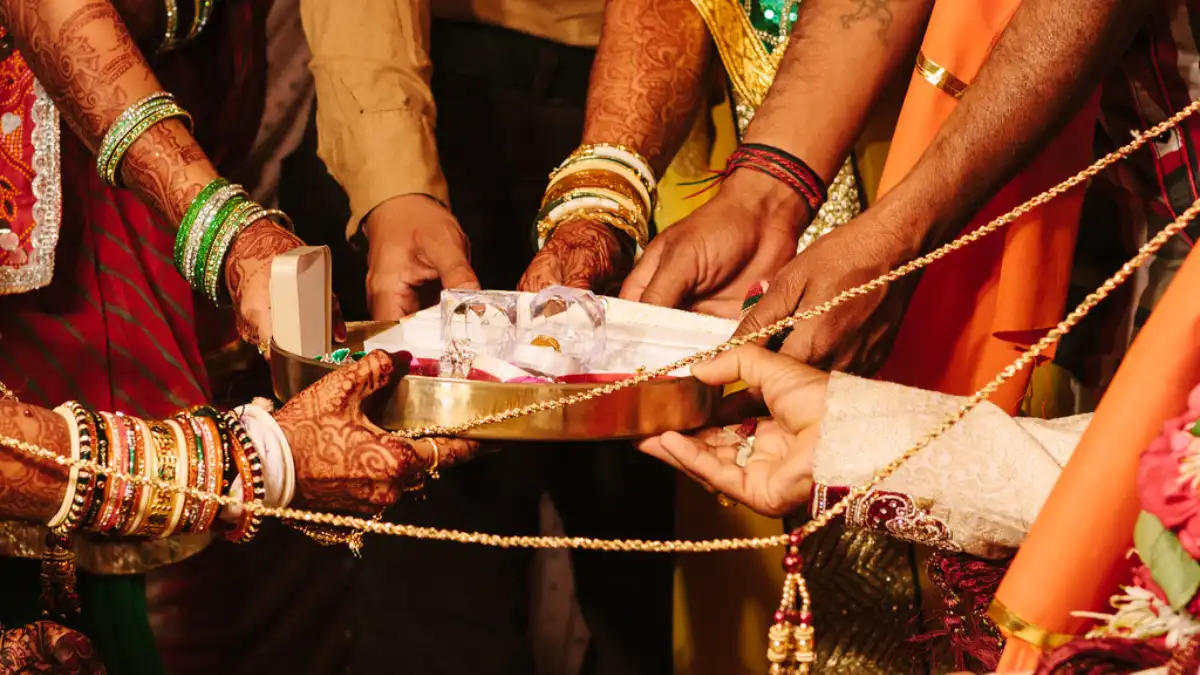
Seven decades after India criminalised dowry, the practice continues to survive inside modern homes, educated families, and urban marriage negotiations. In Guwahati too, the issue is not always visible as an open demand, but often appears through “gifts”, “expectations”, gold, vehicles, household items, and social pressure around wedding status.
Dowry is illegal under the Dowry Prohibition Act, 1961. Yet, nationally, NCRB’s 2023 data recorded 15,489 cases under the Act and 6,156 deaths in dowry death cases, showing that the practice remains a serious social and legal concern.
Dowry remains a serious concern for Guwahati because the practice often hides behind respectable language such as gifts, family expectations, and wedding customs. It places financial pressure on families, reduces women to transactions, and can lead to harassment, violence, and long-term emotional harm despite being illegal in India.
In a city like Guwahati, where education, employment, and urban lifestyles are expanding, dowry should have had no social space left. Yet many families still treat marriage as a financial negotiation, especially when the groom is seen as “settled”, government-employed, professionally successful, or from a socially desirable family.
The form may have changed, but the pressure remains. Instead of direct demands, families may ask for a car “for convenience”, gold “as tradition”, furniture “for the couple”, cash “for arrangements”, or a grand wedding “to maintain status”.
This is where the problem becomes dangerous. When coercion is disguised as culture, families hesitate to call it exploitation. The bride’s side may comply to avoid embarrassment, social judgment, or the fear of the marriage breaking up.
For Guwahati’s middle-class families, the financial burden can be severe. Wedding halls, jewellery, catering, clothing, photography, rituals, and guest expectations already create heavy expenses. Dowry-linked pressure adds another layer of debt, anxiety, and humiliation.
The cost is not only financial. Dowry changes the emotional foundation of marriage. It tells a woman that her dignity is negotiable, her worth is linked to what her family can provide, and her safety may depend on satisfying demands after marriage.
This is why dowry cannot be dismissed as a private family matter. It is a public social crisis. It affects women’s safety, family finances, mental health, legal systems, and the moral character of communities.
The issue also requires a stronger conversation in Guwahati’s schools, colleges, workplaces, and neighbourhoods. A city cannot call itself modern if marriage negotiations still include coded financial demands from the bride’s family.
Parents of sons must take the first responsibility. Refusing dowry should not be treated as a favour or moral achievement; it should be the minimum standard. Families that demand dowry should face social disapproval, not silent cooperation.
Parents of daughters also need support. Many families pay dowry not because they agree with it, but because they fear social consequences. Community networks, women’s groups, legal awareness campaigns, and public reporting systems must make it easier for families to refuse demands.
Religious leaders, community elders, marriage organisers, and local institutions in Guwahati can also play a role. Public declarations of dowry-free marriages, simple wedding advocacy, and social recognition for families rejecting dowry can help change behaviour.
The law already exists, but the law alone cannot dismantle a practice protected by social silence. Enforcement matters, but so does everyday refusal, in living rooms, wedding meetings, family WhatsApp groups, and community gatherings.
The next step for Guwahati should be clear: make dowry socially unacceptable before it becomes legally actionable. Every demand dressed up as tradition must be questioned, every “gift expectation” must be examined, and every marriage negotiation must begin with dignity, not transaction.
Dowry survives when society looks away. Guwahati must not.
Key Points
| Issue | Why It Matters |
|---|---|
| Dowry is illegal | Criminalised under the Dowry Prohibition Act, 1961 |
| Hidden demands | Often framed as gifts, tradition or expectations |
| Family impact | Creates debt, pressure and social humiliation |
| Women’s safety | Can lead to harassment, violence and emotional abuse |
| Guwahati relevance | Urban education has not fully erased marriage-linked financial pressure |
| Way forward | Social refusal, legal awareness and dowry-free marriage norms |
Frequently Asked Questions
Is dowry illegal in India?
Yes. Dowry is illegal under the Dowry Prohibition Act, 1961. Giving, taking, or demanding dowry can attract legal action.
Why does dowry still continue in cities like Guwahati?
Dowry continues because it is often disguised as gifts, family expectations, wedding status, or “tradition”. Social pressure prevents many families from openly resisting it.
How does dowry affect women?
Dowry can reduce women to financial transactions and may lead to harassment, emotional abuse, domestic violence, debt pressure on families, and, in extreme cases, dowry-related deaths.
What can Guwahati families do to stop dowry?
Families can openly reject dowry demands, support simple weddings, report harassment, educate children early, and socially discourage marriage negotiations that involve cash, gold, vehicles, or forced gifts.