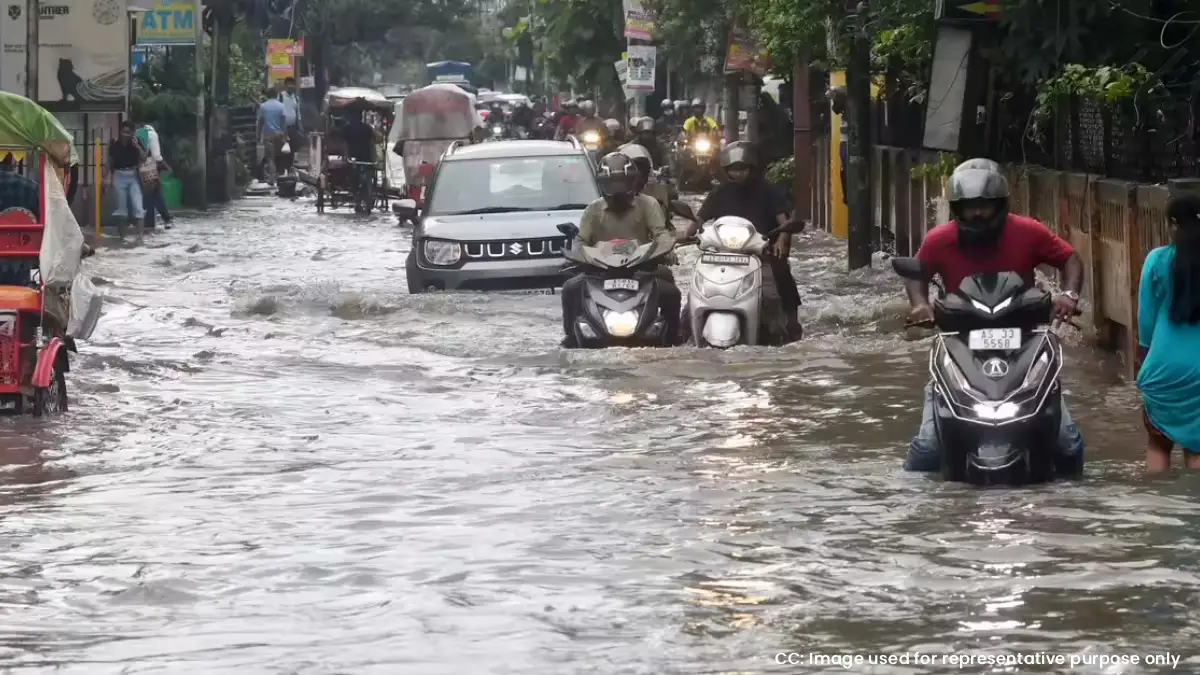
A brief spell of rain on the evening of April 19 once again pushed Guwahati into a familiar crisis, with widespread waterlogging, traffic paralysis, and public disruption reported across the city.
From major arterial roads like GS Road and Zoo Road to residential areas in Panjabari, Rukminigaon, and Hatigaon, the city’s drainage system struggled to cope, highlighting long-standing infrastructure concerns.
Heavy rainfall on April 19 caused severe waterlogging across Guwahati, disrupting traffic and daily life. The incident highlighted ongoing issues with drainage infrastructure and a lack of coordination among GMC, GMDA, and PWD, contributing to repeated urban flooding.
Widespread Impact Across Guwahati
Even a short duration of rainfall led to flooded streets and stalled vehicles, with commuters stranded for hours in multiple parts of the city.
Low-lying areas were particularly affected, with water accumulating rapidly and spilling into nearby localities.
A Recurring Urban Crisis
For residents of Guwahati, such incidents are no longer unexpected. Similar situations have been reported repeatedly over the past two decades, turning monsoon and pre-monsoon showers into a source of disruption.
The April 19 rainfall once again exposed the city’s vulnerability to even moderate weather events.
Role of Key Agencies Under Scrutiny
At the centre of the issue is the lack of coordination among three major agencies responsible for urban infrastructure:
- Guwahati Municipal Corporation (GMC) – responsible for drainage and waste management
- Guwahati Metropolitan Development Authority (GMDA) – oversees urban planning and development
- Public Works Department (PWD-Roads) – manages road infrastructure
Experts and residents alike point out that overlapping responsibilities and poor coordination often lead to incomplete or ineffective solutions.
Drainage System Under Pressure
Blocked drains, encroachments on natural water channels, and inadequate maintenance have compounded the problem.
When heavy rainfall occurs, water has limited pathways to flow out, resulting in rapid accumulation and flooding across roads and neighbourhoods.
Growing Frustration Among Residents
The repeated cycle of flooding has led to increasing frustration among Guwahati residents, who face:
- Traffic delays and breakdown of vehicles
- Damage to property and businesses
- Disruption to daily work and routines
Many are now questioning the effectiveness of ongoing infrastructure projects.
What Happens Next
With the monsoon season approaching, authorities are expected to intensify drainage cleaning and monitoring efforts.
However, long-term solutions—particularly improved coordination between agencies—are seen as essential to prevent recurring flooding in Guwahati.
Frequently Asked Questions
Why did Guwahati face waterlogging on April 19?
The city’s drainage system could not handle the rainfall, leading to water accumulation across multiple areas.
Which agencies are responsible for drainage in Guwahati?
GMC, GMDA, and PWD share responsibilities related to drainage, roads, and urban planning.