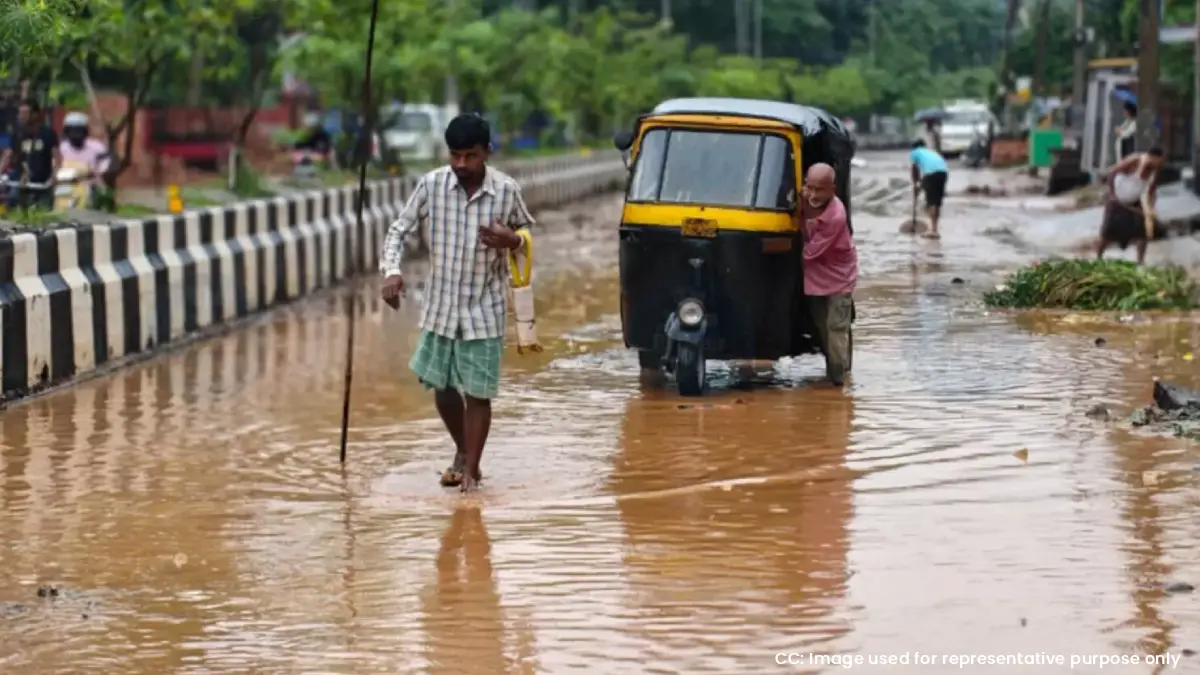
Every monsoon, Guwahati faces a familiar crisis—a few hours of rainfall are enough to bring the city to a standstill. Roads turn into streams, vehicles stall in waterlogged streets, and entire neighbourhoods get submerged, disrupting daily life across the city.
For residents, this is no longer an occasional problem but a recurring reality that affects mobility, livelihoods, and overall quality of life.
Guwahati faces severe flooding during monsoons, with even short spells of rain causing waterlogging, traffic disruption, and damage to homes and businesses. The recurring crisis highlights gaps in drainage and urban planning, affecting daily life and livelihoods across the city.
Commuters Bear the Immediate Impact
Waterlogging across major roads forces commuters to spend hours stranded in traffic. In many cases, vehicles break down mid-journey as engines fail after being submerged in water.
Residents often have no choice but to abandon vehicles temporarily, leading to additional stress and logistical challenges.
Financial Strain on Residents
The aftermath of flooding brings a significant financial burden:
- Vehicle repair costs after water damage
- Loss of work hours due to delays
- Increased expenses linked to disrupted routines
For many in Guwahati, these recurring costs have become an unavoidable part of the monsoon season.
Homes and Businesses Affected
Flooding is not limited to roads. Water often enters homes and commercial establishments, damaging:
- Furniture and appliances
- Shop inventory and goods
- Essential household items
For small traders and daily wage earners, even a single day of flooding can result in considerable financial loss.
A Systemic Urban Challenge
The repeated nature of the crisis points to broader issues in urban infrastructure and planning. Challenges such as inadequate drainage systems, clogged drains, and rapid urban expansion continue to contribute to the problem.
Artificial flooding caused by poor waste management and blocked water flow further worsens the situation.
Impact on Quality of Life
Beyond financial loss, residents face ongoing mental stress during the monsoon. The uncertainty of daily movement, risk to property, and constant disruption affect overall well-being.
For many, navigating Guwahati during heavy rainfall has become a challenge that extends beyond inconvenience.
What Happens Next
With the monsoon season approaching each year, the need for long-term solutions becomes more urgent. Strengthening drainage infrastructure, improving waste management, and adopting climate-resilient urban planning are key to addressing the issue.
Until such measures are effectively implemented, Guwahati’s monsoon crisis is likely to remain a recurring concern.
Frequently Asked Questions
Why does Guwahati face flooding every monsoon?
Flooding is caused by a combination of intense rainfall, inadequate drainage systems, and clogged water channels.
How does flooding affect daily life in Guwahati?
It disrupts traffic, damages vehicles and property, and leads to financial and mental stress for residents.