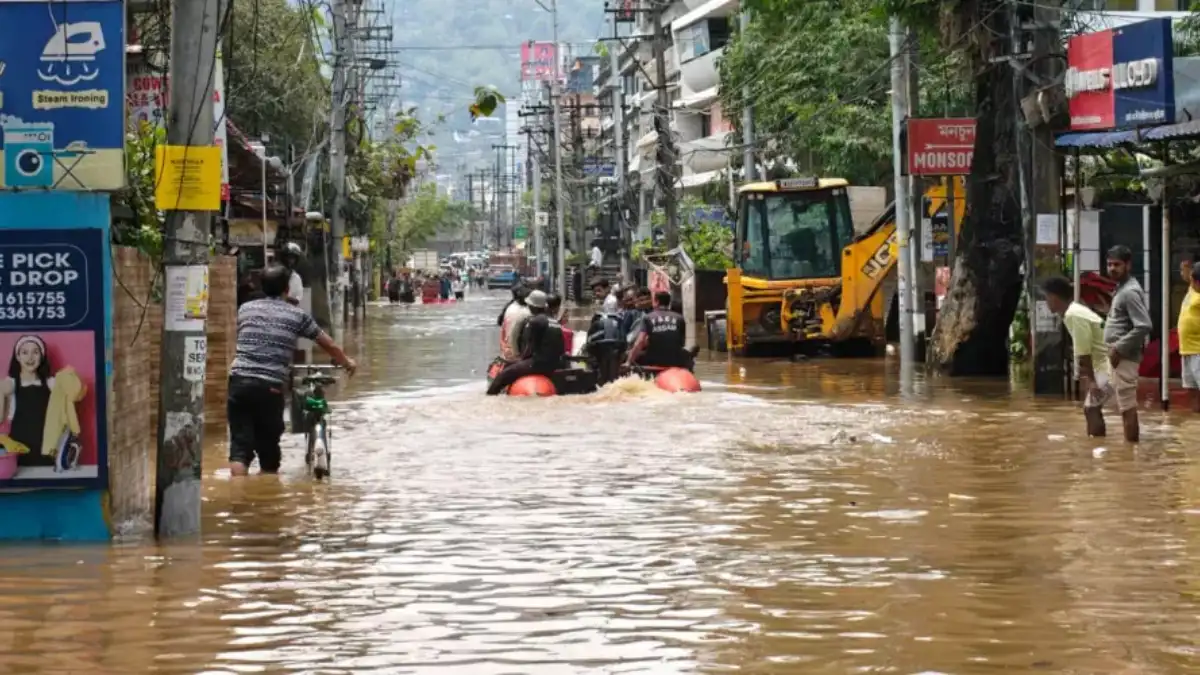
Guwahati has witnessed a significant shift in rainfall patterns over the past decade, raising concerns about rising flood risks and pressure on urban infrastructure. The changing nature of precipitation is increasingly being linked to frequent waterlogging and disruption across the city.
The issue came into sharp focus again after the April 19 rainfall, which triggered artificial flooding in multiple parts of Guwahati and reportedly led to loss of lives.
Rainfall patterns in Guwahati have changed over the past decade, with more intense and erratic precipitation increasing the risk of flooding. The April 19 rain highlighted how urban infrastructure struggles to cope with sudden heavy rainfall, leading to waterlogging and disruption.
Changing Rainfall Trends in Guwahati
Experts and residents alike have observed that rainfall in Guwahati is becoming more intense, short-duration, and unpredictable.
Instead of steady rainfall spread over days, the city is experiencing sudden heavy downpours, which overwhelm drainage systems and lead to rapid water accumulation.
April 19 Rainfall Highlights Vulnerability
The recent spell of rain on April 19 exposed the city’s vulnerability, with several areas reporting severe waterlogging.
Major roads were affected, disrupting traffic movement and daily life, while some low-lying localities faced flooding conditions within a short span.
Impact on Urban Infrastructure
The shift in rainfall patterns is placing stress on Guwahati’s infrastructure, including:
- Drainage systems are struggling to handle sudden water flow
- Road networks are facing frequent waterlogging
- Increased risk of landslides in hillside areas
Such challenges are becoming more frequent as the city expands.
Link to Urban Flooding
Artificial flooding—caused by blocked drains, encroachment, and poor water flow—is being aggravated by these changing rainfall patterns.
When heavy rain coincides with inadequate drainage, water accumulates rapidly, affecting both residential and commercial areas.
Growing Public Concern
Residents across Guwahati are increasingly concerned about:
- Repeated flooding during rainfall
- Safety risks in low-lying and hill areas
- Disruption to daily commuting and business
The issue has also sparked discussions on urban planning and climate resilience.
Need for Long-Term Solutions
Experts suggest that addressing the problem will require:
- Upgrading drainage infrastructure
- Better waste management to prevent clogging
- Urban planning aligned with climate trends
Without such measures, the impact of changing rainfall patterns is likely to intensify.
What Happens Next
With the monsoon season approaching, authorities are expected to monitor weather patterns closely and strengthen preparedness.
For Guwahati, adapting to changing rainfall trends will be critical to reducing flood risks and ensuring urban resilience in the years ahead.
Frequently Asked Questions
Why are floods increasing in Guwahati?
Changing rainfall patterns, combined with inadequate drainage and urban expansion, are increasing the risk of flooding.
What was the impact of the April 19 rainfall?
It caused widespread waterlogging and disruption in multiple parts of the city, highlighting infrastructure challenges.