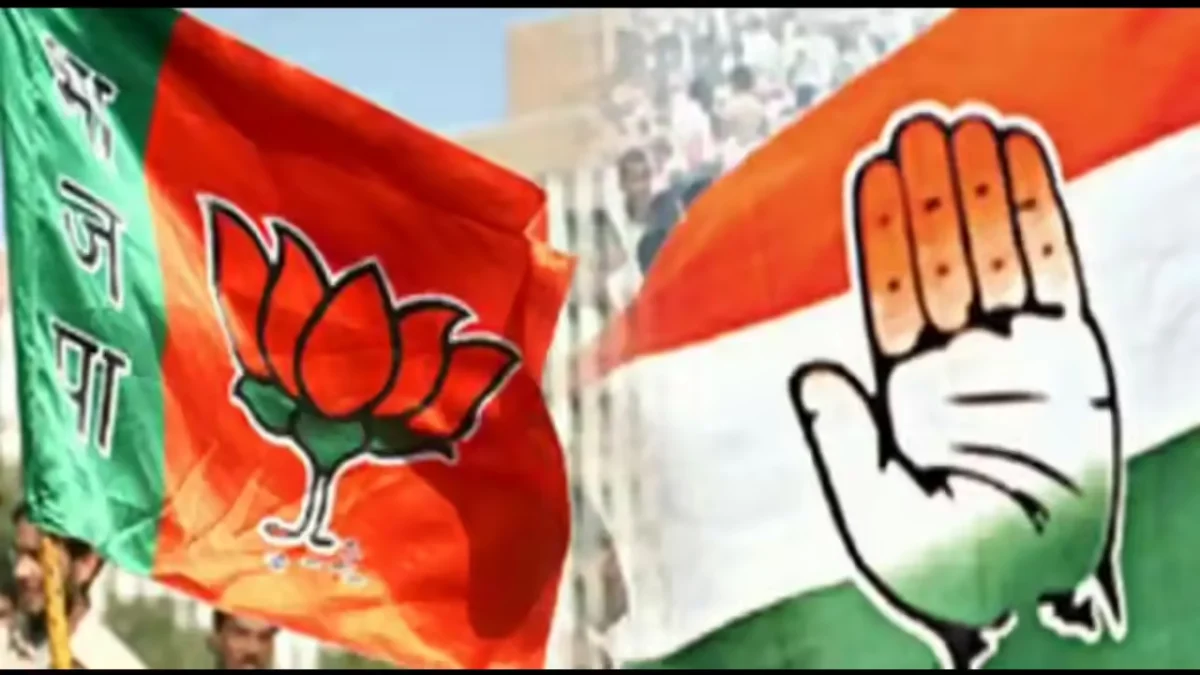
As the 2026 Assam Assembly elections approach, Guwahati is increasingly reflecting a broader political shift across the state, one where smaller parties are finding it harder to remain relevant.
Once a space where regional voices and alternative political platforms could gain traction, Guwahati’s electoral landscape is now becoming more polarised, largely dominated by the Bharatiya Janata Party and the Indian National Congress.
Smaller political parties in Assam, including those active in Guwahati, are losing electoral space as politics becomes increasingly dominated by the BJP and Congress. The shift reflects changing voter behaviour, stronger party machinery, and growing influence of resources and narrative control in elections.
Shrinking Space for Smaller Parties
Several smaller and regional parties are facing challenges in maintaining visibility and influence, including:
- National People’s Party (NPP)
- All India Trinamool Congress (AITC)
- Jharkhand Mukti Morcha (JMM)
- Raijor Dal
- Assam Jatiya Parishad
In urban centres like Guwahati, where campaign visibility, media reach, and organisational strength play a crucial role, these parties are increasingly being overshadowed.
Why Guwahati Reflects This Shift
Guwahati, as Assam’s largest urban centre, often sets the tone for statewide political trends.
Key factors influencing this shift include:
- Strong presence of national parties with extensive resources
- Higher media and digital campaign influence
- Voter preference for parties seen as electorally viable
- Consolidation of votes to avoid fragmentation
This has led to a more bipolar contest, especially in high-profile constituencies across the city.
Changing Nature of Political Competition
The transformation is not limited to electoral outcomes; it reflects bigger structural changes:
- Organisational scale: Larger parties dominate through stronger networks
- Financial resources: Campaign reach and visibility have increased in importance
- Narrative control: Messaging and media influence shape voter perception
For smaller parties, this means competing not just on ideology, but on capacity and reach.
Impact on Voter Choice
The shrinking space for smaller parties has also influenced how voters engage with politics in Guwahati:
- Reduced visibility of alternative political platforms
- Limited exposure to issue-based or nuanced campaigns
- Greater focus on major party narratives
As a result, voters may find fewer viable alternatives beyond the dominant parties.
What Happens Next
As campaigning intensifies in Guwahati, the trend of political consolidation is expected to continue. Smaller parties may focus on select constituencies or alliances to retain relevance.
The upcoming election will test whether regional voices can still carve out space in an increasingly polarised political environment.
Frequently Asked Questions
Q1. Why are smaller parties losing space in Assam politics?
Due to the growing dominance of larger parties like the BJP and Congress, along with stronger resources and campaign reach.
Q2. How is Guwahati affected by this trend?
Guwahati, being a major urban centre, reflects this shift more prominently with highly competitive, party-dominated elections.
Q3. Which smaller parties are impacted?
Parties like Raijor Dal, Assam Jatiya Parishad, NPP, AITC, and JMM are among those facing reduced political space.