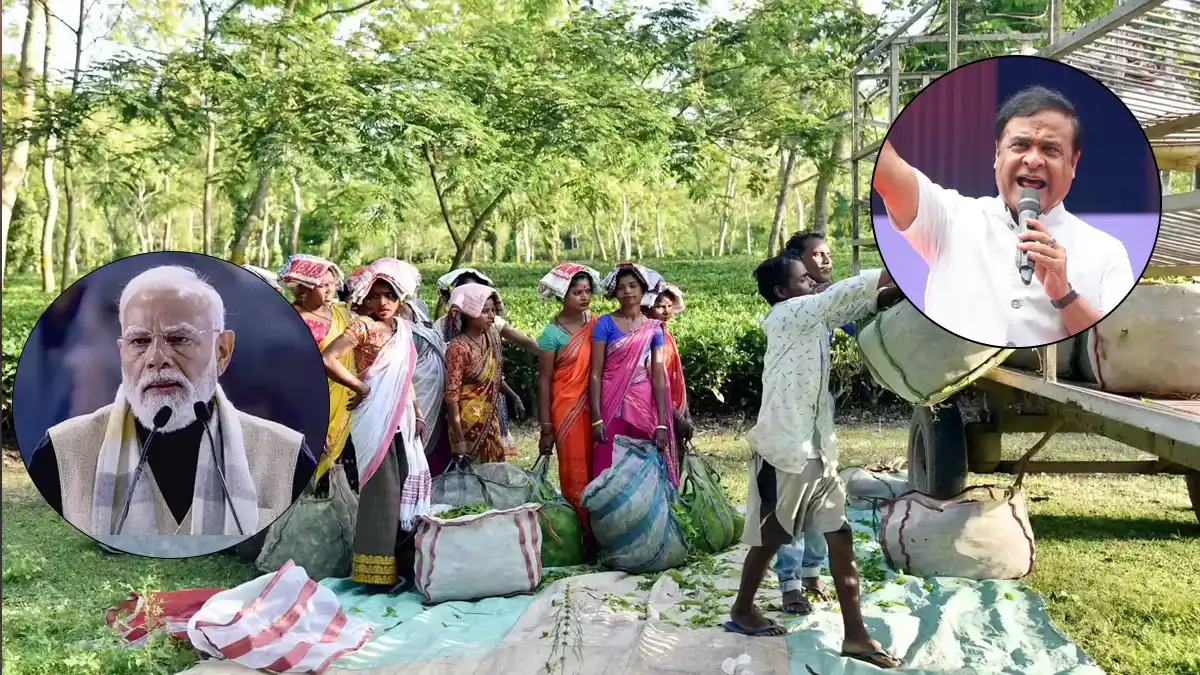
The Union Government has released ₹213.9 crore to Assam under the Fifteenth Finance Commission to strengthen rural local bodies, with the funding expected to indirectly ease pressure on Guwahati by improving civic services, sanitation and water infrastructure in surrounding rural belts.
The amount was released on January 20 as the first instalment for the 2025–26 financial year.
The funds will be distributed across 2,192 Gram Panchayats, 182 Block Panchayats and 27 Zilla Parishads across the state, supporting grassroots governance and essential development works.
What does the fund release means
The ₹213.9 crore released by the Centre will be used by rural local bodies in Assam to improve basic civic infrastructure such as sanitation, drinking water, rural roads and community assets. While Guwahati is an urban centre, officials say better rural infrastructure in nearby districts helps reduce migration pressure, sanitation load and unplanned expansion around the city.
How the funds will be used
According to official guidelines:
- United Grants form the largest share
- Can be used for local development priorities
- Covers subjects under the Eleventh Schedule (roads, community assets, welfare)
- Cannot be used for salaries or administrative expenses
- Tied Grants are reserved for essential services such as:
- Maintaining ODF (Open Defecation Free) status
- Solid and liquid waste management
- Drinking water supply and rainwater harvesting
- Faecal sludge and wastewater treatment
The grants were recommended by the Ministry of Panchayati Raj and the Ministry of Jal Shakti, and released by the Ministry of Finance.
Why this matters for Guwahati
While the funding is meant for rural Assam, its impact extends to Greater Guwahati and adjoining districts such as Kamrup (Rural), Morigaon and Nalbari.
- Improved sanitation in villages helps reduce waste flow into rivers and wetlands feeding Guwahati
- Better water systems reduce dependency on urban infrastructure
- Stronger rural livelihoods help curb distress migration into Guwahati city
- Planned rural development eases unregulated peri-urban growth around the capital
Urban planners note that Guwahati’s flooding, waste and congestion problems are closely linked to weak infrastructure in surrounding rural and semi-rural areas.
What happens next
Officials said rural bodies can now begin or accelerate approved projects once funds are credited. The second instalment under the Fifteenth Finance Commission will be released later in the financial year, subject to utilisation and compliance reports.
State departments are expected to monitor implementation closely to ensure funds translate into on-ground improvements.
Frequently Asked Questions
Q1. Is this ₹213.9 crore meant for Guwahati city?
No. The funds are for rural local bodies across Assam, but improved rural infrastructure around Guwahati can indirectly benefit the city.
Q2. Can Panchayats use this money for staff salaries?
No. Finance Commission guidelines prohibit using these grants for salaries or administrative expenses.
Q3. Which services get priority under Tied Grants?
Sanitation, waste management, drinking water supply, rainwater harvesting and wastewater treatment.