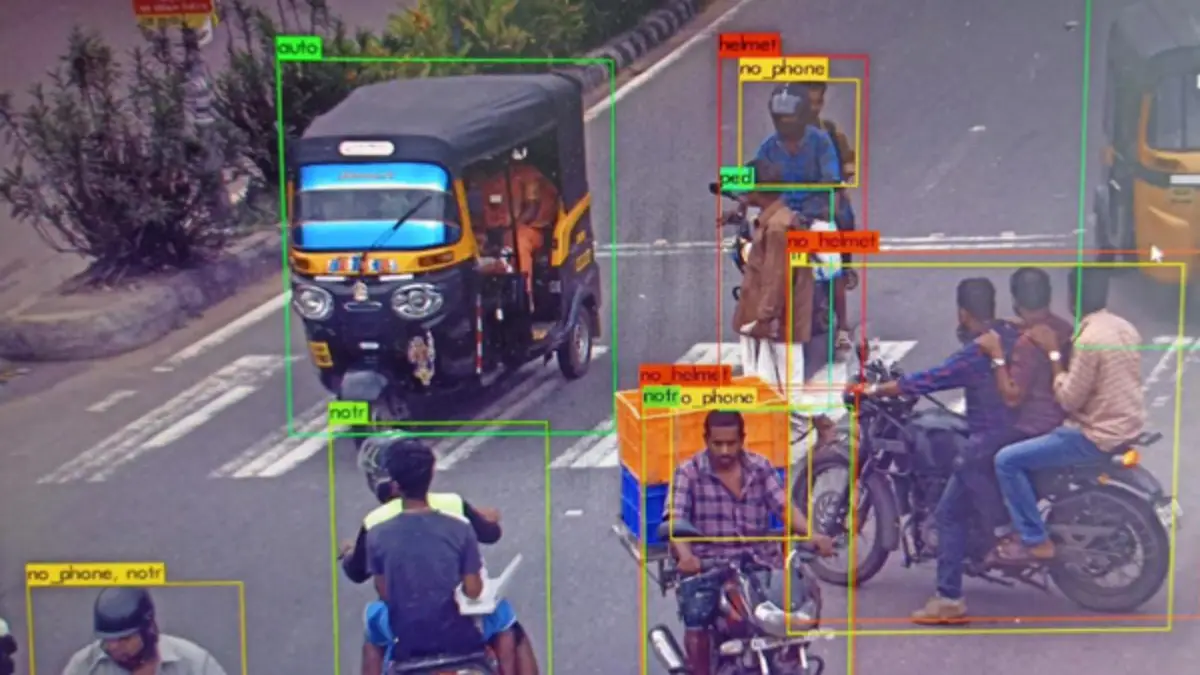
Guwahati’s smart traffic surveillance system has flagged a sharp rise in road safety violations, with thousands of two-wheeler riders caught flouting helmet rules in just the first twelve days of the new year. Data recorded between January 1 and January 12 shows widespread non-compliance, raising concerns over rider behaviour despite increased monitoring across the city.
The violations were detected through the city’s automated surveillance network operated by Guwahati Smart City Limited across major roads and junctions.
Guwahati’s smart traffic cameras recorded 4,261 cases of helmetless riding and 35 instances of triple riding between January 1 and January 12. Officials say most violations involve riders skipping helmets even for short trips, highlighting persistent gaps in road safety awareness despite expanded surveillance.
Thousands of Riders Caught Without Helmets
An official from GSCL told GPlus that helmet violations continue to dominate traffic offence data in Guwahati.
“From January 1 to January 12 alone, our system recorded 4,261 cases of riders without helmets,” the official said. “It’s not just that they don’t wear helmets for long rides;
many riders skip helmets even for short distances, assuming nothing will happen.”
The official noted that such assumptions significantly increase the risk of serious injury, especially on Guwahati’s congested and uneven roads.
Triple Riding Still a Concern
While less frequent than helmet violations, triple riding remains a persistent issue. According to GSCL data, smart cameras captured 35 cases of triple riding during the same twelve-day period.
“It may seem like a small number compared to helmet violations, but triple riding increases the risk of injury for everyone on the two-wheeler,” the official said.
Traffic experts note that triple riding affects vehicle balance, braking distance, and rider control, particularly in stop-and-go city traffic.
How the Smart Camera System Works
Guwahati’s traffic cameras are part of the city’s broader Intelligent City Surveillance System. The cameras automatically detect violations, record visual evidence, and generate reports that are forwarded to enforcement agencies for further action.
Officials said the system has improved detection, especially in areas where manual monitoring is difficult, but stressed that technology alone cannot change road behaviour.
Behaviour Slow to Change
Despite increased surveillance and periodic enforcement drives, officials admit that rider behaviour in Guwahati is slow to evolve. Many commuters continue to treat helmets as optional and underestimate the risks of short-distance travel without safety gear.
Traffic police sources say visible enforcement often leads to temporary compliance, but violations return once checks ease.
Why This Matters for Guwahati
With rising vehicle density and mixed traffic conditions, Guwahati remains vulnerable to road accidents. Helmet use is one of the most basic and effective safety measures, yet the data suggests a disconnect between awareness and action.
Road safety experts warn that unless compliance improves, preventable injuries will continue to burden families and healthcare systems in the city.
What Happens Next
Traffic authorities are expected to intensify enforcement based on smart camera inputs. Officials have also indicated that awareness campaigns may be strengthened to address habitual violations.
Until sustained compliance is achieved, helmetless riding and unsafe practices are likely to remain a daily challenge on Guwahati’s roads.
Frequently Asked Questions
Q1. How many helmet violations were recorded in Guwahati recently?
Smart cameras recorded 4,261 helmetless riding cases between January 1 and January 12.
Q2. What role do smart cameras play in traffic enforcement?
They automatically detect violations, capture evidence, and generate reports for enforcement agencies to take action.